Pallets look like a small line item, but for a busy warehouse they add up quickly: the pallets you buy, the ones that break, the ones that disappear with outbound shipments and the ones you pay to throw away. The good news is that cost-effective pallet solutions are mostly about making a few smart choices and sticking to them.
This guide covers where pallet costs hide in a warehouse, how to match the right pallet to each job and practical ways BC warehouses cut their pallet spend. It is written by the team at Express Pallet Collection, a Surrey pallet supplier with 10 years in business supplying new and recycled pallets across the Lower Mainland.
Where pallet costs hide in a warehouse
The purchase price is only part of the cost. When you add everything up, pallet spending usually includes:
- Purchases of new and recycled pallets,
- Damage from forklifts, overloading and poor storage, which shortens pallet life,
- Losses when pallets leave with outbound shipments and never come back,
- Disposal of broken pallets, including garbage fees and, in Metro Vancouver, possible surcharges for loads containing clean wood,
- Labour and space spent sorting, stacking and moving empty pallets, and
- Product damage when a weak or wrong-sized pallet fails under load.
Cutting pallet costs means working on all of these, not just negotiating a lower unit price.
Match the pallet to the job
The biggest saving most warehouses can make is to stop using one pallet type for everything. A simple rule of thumb:
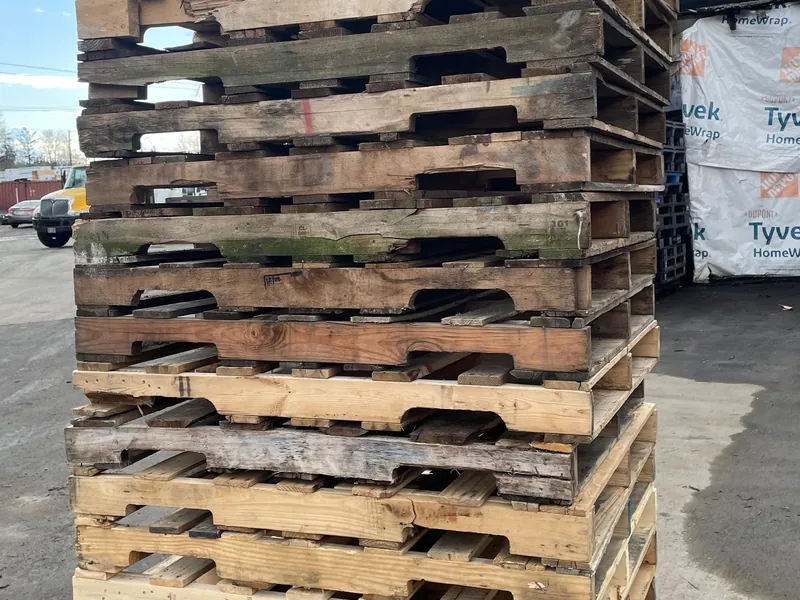
- Internal moves and storage: #2 (Grade B) recycled pallets are structurally sound and the lowest-cost option.
- Outbound shipments to customers and distribution centres: #1 (Grade A) recycled pallets look and perform close to new at a lower price.
- Heavy loads, racking and two-sided forklift access: 4-way pallets, or reconditioned block pallets for the heaviest loads.
- Automated equipment, retail displays or unusual products: new pallets built to a consistent specification or a custom size.
- Export shipments: heat-treated pallets with an ISPM-15 stamp where the destination requires it.
Our standard pallet sizes guide explains the sizes, grades and pallet types in more detail if you are not sure which fits your operation.
Recycled vs new: where each one saves money
Recycled pallets cost less than new pallets and are widely accepted in BC, which makes them the default choice for most standard 48 x 40 shipments. New pallets cost more per unit but can save money when consistency matters, for example when an automated system jams on irregular pallets, or when a custom size lets you fit more product per pallet and per truck.
Many warehouses use a mix: recycled pallets for the bulk of their volume and new pallets built to spec for the products and customers that need them.
Buy in bulk and schedule your deliveries
Ordering pallets one small load at a time is expensive. Buying in larger volumes usually brings a better price per pallet and fewer delivery charges. Better still, agree a regular delivery schedule with your supplier so you always have stock without tying up yard space. We deliver across the Lower Mainland, usually the next business day for in-stock pallets, through our bulk pallet delivery service.
Turn your empty pallets into savings
Empty pallets you no longer need still have value. Instead of paying to dispose of them, sell them back or have them collected for recycling. At Express Pallet Collection, pickup is free for loads of 200 or more standard-size 4-way pallets, and smaller or mixed loads have a pickup charge we quote upfront. Broken pallets are repaired or recycled through our pallet recycling and repair operation instead of going to landfill.
Reduce pallet damage
Every pallet that breaks early is money lost. A few habits make a big difference:
- train forklift operators to enter pallets squarely and avoid pushing or dragging them,
- keep loads within the pallet’s rated capacity and spread weight evenly,
- make sure pallets fit your racking, with no overhang that weakens the deck boards,
- store empty pallets flat and off wet ground, and
- pull damaged pallets out of service quickly before they fail under a load.
Track your pallets
You cannot control what you do not measure. Even a simple spreadsheet showing pallets received, shipped, returned and scrapped each month will show where pallets are being lost or damaged. If a large share of your pallets leave with customers, consider agreeing pallet returns or exchanges with your regular accounts.
Cost-effective pallet solutions: a quick checklist
- Use Grade B for internal moves and Grade A for outbound shipments.
- Reserve new and custom pallets for jobs that really need them.
- Order in bulk on a regular delivery schedule.
- Have empty and broken pallets collected instead of paying for disposal.
- Train staff to reduce forklift and storage damage.
- Track pallets in and out every month.
Want a price on recycled or new pallets, or a pickup for your empties? Request a quote or call +1 778-776-1957, and we will usually reply within one business day.
Frequently asked questions
What is the cheapest pallet option for a warehouse?
For most internal moves and storage, #2 (Grade B) recycled pallets are the lowest-cost option. They are structurally sound but may have repaired boards or cosmetic wear.
Do recycled pallets really save money?
Yes. Recycled pallets cost less than new pallets, and selling back or recycling your empty pallets avoids disposal fees, so savings come from both buying and getting rid of pallets.
Is it worth buying pallets in bulk?
Usually, yes. Larger orders typically bring a better price per pallet and fewer delivery charges, especially on a regular delivery schedule.
Why don’t pallet suppliers publish fixed prices?
Pallet prices move with the lumber market and depend on size, grade, quantity and delivery location, so most suppliers in BC quote each order rather than publish fixed prices.