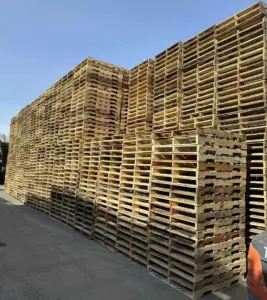
Every business that ships, receives or stores goods in British Columbia handles pallets, and most of them throw away more wood than they realize. Sustainable pallet practices are not just good for the environment: they cut costs, help you stay on the right side of local disposal rules and make your supply chain more reliable.
This guide explains how pallet reuse, repair and recycling work in BC, what Metro Vancouver’s clean wood rules mean for your business and how to set up a simple pallet program at your site. It is written by the team at Express Pallet Collection, a Surrey pallet supplier and recycler with 10 years in business.
Why pallets matter for sustainability in BC
A wooden pallet is built to be used many times. A well-made pallet can move goods for years if it is repaired when boards crack, yet many pallets are still sent to landfill after a single trip. That wastes good wood, adds to your garbage bills and means more new lumber has to be cut to replace it.
Because BC has a large forestry industry and busy ports, pallets move through the Lower Mainland in huge numbers. Keeping them in use for as long as possible is one of the easiest sustainability wins available to warehouses, manufacturers, distributors and retailers.
Reuse, repair, recycle: the pallet life cycle
Sustainable pallet management follows a simple order of priority:
- Reuse. A pallet in good condition goes straight back into service, either at your own site or with another business through a recycler.
- Repair. Pallets with broken deck boards or damaged stringers are fixed with salvaged wood and returned to use. Repair is usually far cheaper than building new.
- Recycle. Pallets that are beyond repair are taken apart. Good boards are salvaged for repairs, and the remaining wood is typically ground into chips for uses such as landscaping mulch, animal bedding or fuel.
In the Lower Mainland, recycled pallets are sold in grades. A #1 (Grade A) pallet is in near-new condition with few or no repairs; a #2 (Grade B) pallet is structurally sound but may have repaired boards or cosmetic wear. Our standard pallet sizes guide explains the grades in more detail.
Metro Vancouver’s clean wood rules
Metro Vancouver applies a surcharge to garbage loads at regional disposal facilities that contain more than 5% clean wood. Clean wood includes lumber and pallets, as long as the wood is unpainted, unstained, untreated and free of glue. Nails, screws and staples do not stop wood from counting as clean wood.
In practice, that means throwing untreated pallets in the garbage bin can cost you money. Keeping pallets separate and sending them for reuse or recycling avoids the surcharge and usually costs less than disposal. See Metro Vancouver’s clean wood information card for the official details, and check with your municipality or hauler for current rules.
Choosing recycled pallets without giving up performance
Recycled pallets are not a compromise for most applications. They are a smart choice when:
- you ship domestically and the pallet does not return to you,
- the load is within the pallet’s normal rated capacity,
- appearance is less important than price, for example for internal moves or storage, and
- your customers accept recycled pallets (most distribution centres in BC do, as long as the pallet meets their size and grade requirements).
New pallets still make sense when you need a custom size, a very consistent product for automated equipment or a specific look for retail displays. We offer both, with new pallet manufacturing for custom specifications and graded recycled pallets for everything else.
Putting sustainable pallet practices into action at your site
A basic program takes very little effort and pays for itself quickly:
- Pick a pallet area. Set aside a clearly marked spot in your yard or dock for empty pallets, away from garbage bins.
- Sort as you go. Stack good pallets by size, and keep broken pallets in a separate pile. Standard 48 x 40 pallets are the easiest to reuse and resell.
- Keep contaminated wood out. Painted, treated or chemically contaminated pallets should be kept apart, because they cannot be recycled the same way.
- Book regular pickups. Agree a pickup schedule with a pallet recycler so pallets never pile up or end up in the garbage.
- Buy back. Where possible, buy recycled pallets from the same recycler to close the loop and keep costs down.
How Express Pallet Collection helps
We buy used pallets and collect them from businesses across the Lower Mainland. Pickup is free for loads of 200 or more standard-size 4-way pallets; smaller loads and mixed sizes have a pickup charge that we quote upfront. Collected pallets are sorted, repaired and returned to service through our pallet recycling and repair operation.
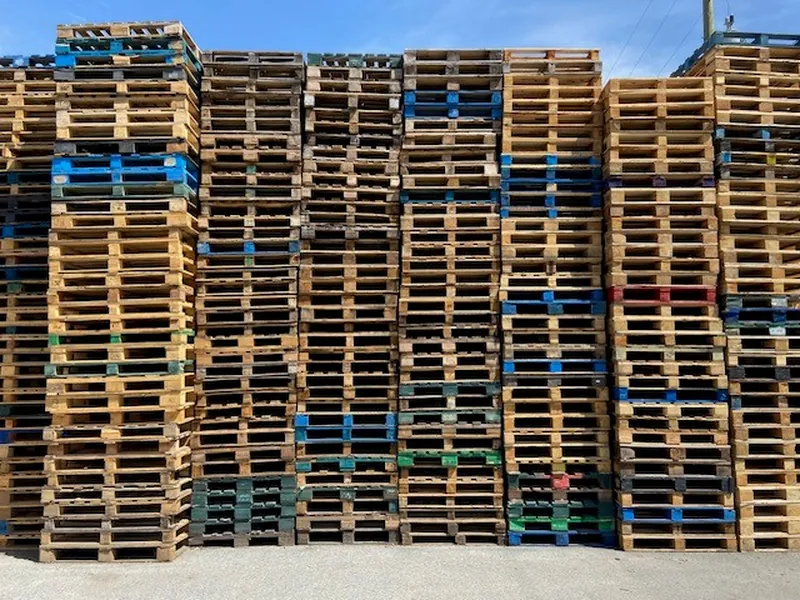
Each month we can supply around 16,000 #1 pallets, 20,000 #2 pallets and 3,000 reconditioned block pallets, so businesses can switch to recycled pallets without worrying about supply. To arrange a pickup or order recycled pallets, request a quote or call +1 778-776-1957.
Frequently asked questions
Can I put old pallets in the garbage in Metro Vancouver?
Untreated, unpainted pallets count as clean wood, and garbage loads with more than 5% clean wood can be charged a surcharge at regional disposal facilities. It is usually cheaper to have them collected for reuse or recycling.
Are recycled pallets as strong as new ones?
A #1 (Grade A) recycled pallet performs very close to a new one for most loads. #2 (Grade B) pallets are structurally sound but may have repaired boards. For very heavy loads or automated systems, new pallets may be the better choice.
Do you pick up pallets for free?
Express Pallet Collection picks up loads of 200 or more standard-size 4-way pallets for free. Smaller loads and mixed sizes have a pickup charge that we quote upfront.
What happens to pallets that cannot be repaired?
They are taken apart. Good boards are reused to repair other pallets, and the remaining wood is typically ground into chips for uses such as mulch, animal bedding or fuel.