What is the standard pallet size in Canada, and which pallet does your business actually need? Buying pallets sounds simple until you have to choose between a 48 x 40 and a 48 x 48, a 2-way and a 4-way, Grade A and Grade B, or heat-treated and standard. Pick wrong and you pay for pallets that don’t fit your racking, fail under load or get your shipment held at a foreign port.
This guide explains the pallet sizes, types and grades used by BC businesses, what the HT stamp means, what drives pallet prices and how to order — written by the team at Express Pallet Collection, a Surrey pallet supplier with 10 years in business and more than 20 years of management experience in the pallet industry.
Quick answer: which pallet do most businesses need?
Most businesses in British Columbia need a standard 48 x 40 inch, 4-way wooden pallet. It is the standard pallet size in Canada — 1219 x 1016 mm — used by grocery chains, retailers and most distribution centres. Choose a recycled #1 (Grade A) or #2 (Grade B) pallet to save money for domestic shipping, a new pallet when appearance and consistency matter, and a heat-treated (HT) pallet for overseas exports.
Standard pallet sizes and dimensions in Canada
The 48 x 40 inch pallet dominates in Canada and the United States, but several other standard sizes are common in specific industries:
| Pallet size (inches) | Dimensions (mm) | Common uses |
|---|---|---|
| 48 x 40 | 1219 x 1016 | Grocery, retail, general distribution — the North American standard |
| 48 x 48 | 1219 x 1219 | Drums, chemical totes, bulk bags |
| 42 x 42 | 1067 x 1067 | Telecommunications, paint |
| 40 x 40 | 1016 x 1016 | Dairy |
| 48 x 45 | 1219 x 1143 | Automotive parts |
| Custom | Any | Oversized, long or unusually shaped products |
Pallet dimensions are always written length x width. The first number is the length of the stringers (or the side the forks normally enter); the second is the length of the deck boards. If you are not sure what size you need, measure the footprint of your product or your racking bays — or send us your specs and we will recommend one.
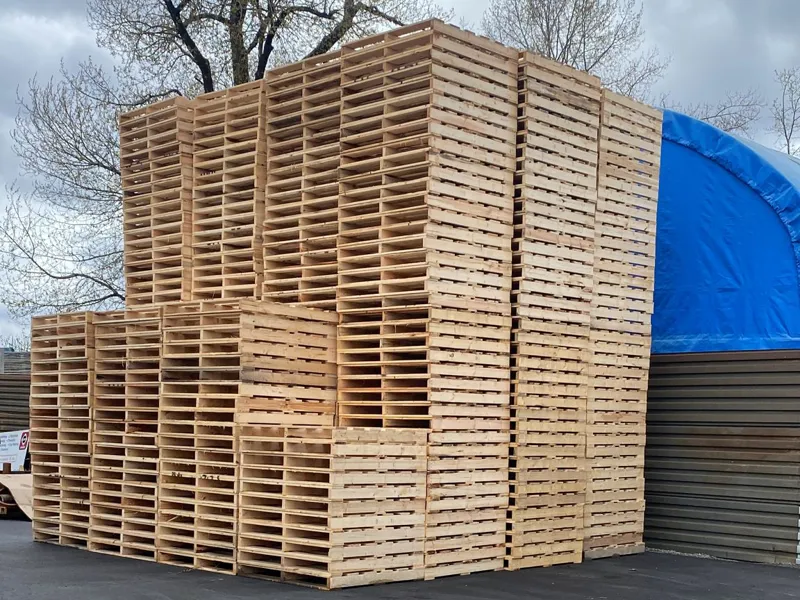
Pallet types: stringer vs block, 2-way vs 4-way
Stringer pallets
A stringer pallet is built on two or three long boards (the stringers) with deck boards nailed across the top and bottom. Most 48 x 40 pallets are stringer pallets. They are economical, easy to repair and work for the majority of warehouse and shipping jobs.
Block pallets
A block pallet sits on nine wooden blocks instead of stringers. It is stronger, handles heavier loads and can be entered from all four sides by both forklifts and pallet jacks, which is why automated warehouses and heavy-goods shippers often prefer them.
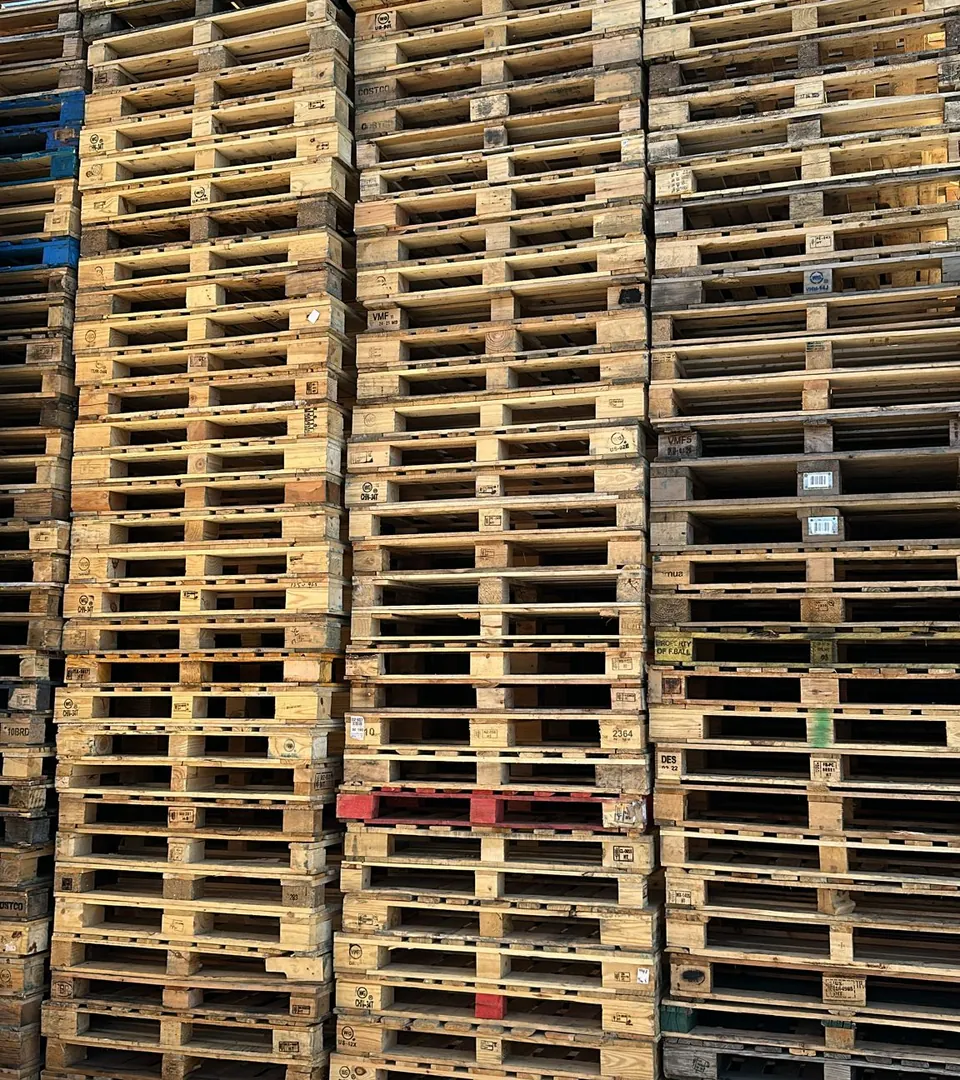
2-way vs 4-way pallets
A 2-way pallet can be lifted from two opposite ends only. A 4-way pallet can be lifted from all four sides — either through notches cut into the stringers (a “partial” 4-way, which forklifts can enter from the sides but pallet jacks usually cannot) or because it is a block pallet (a “true” 4-way). 4-way pallets make loading trucks and filling racking faster, so they are the default choice for most distribution work.
New vs recycled pallets: how the grades work
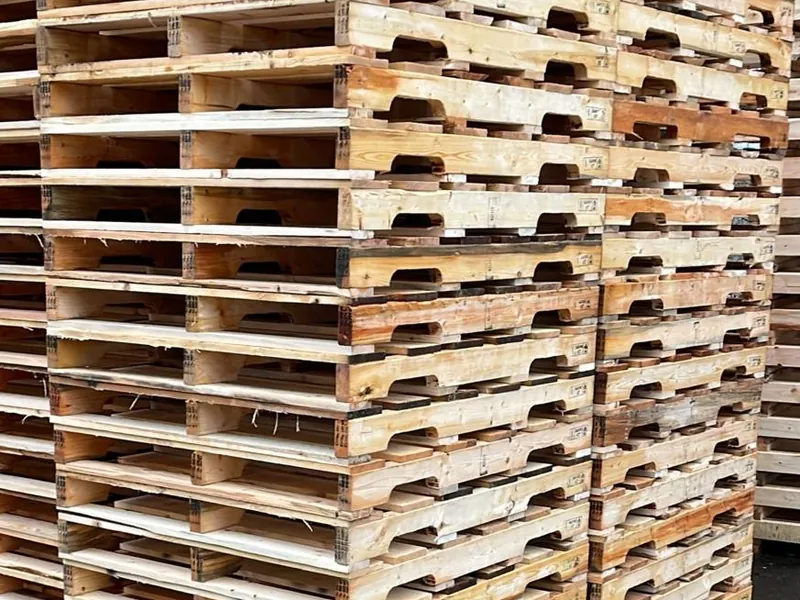
Recycled pallets are collected, sorted, inspected and repaired before resale. They cost less than new pallets and keep usable wood out of the landfill. Grades vary between suppliers, but in the Lower Mainland they generally work like this:
| Grade | Condition | Best for |
|---|---|---|
| New | Fresh lumber, consistent size and appearance | Retail displays, food, export, brand-sensitive shipments |
| #1 (Grade A) | Excellent condition, few or no repairs | Most warehouse and shipping jobs at a lower cost than new |
| #2 (Grade B) | Fully functional, repaired boards or cosmetic wear | One-way shipments, internal storage, budget-driven volume |
| Reconditioned | Repaired and refurbished, including block pallets | High-volume users who want value |
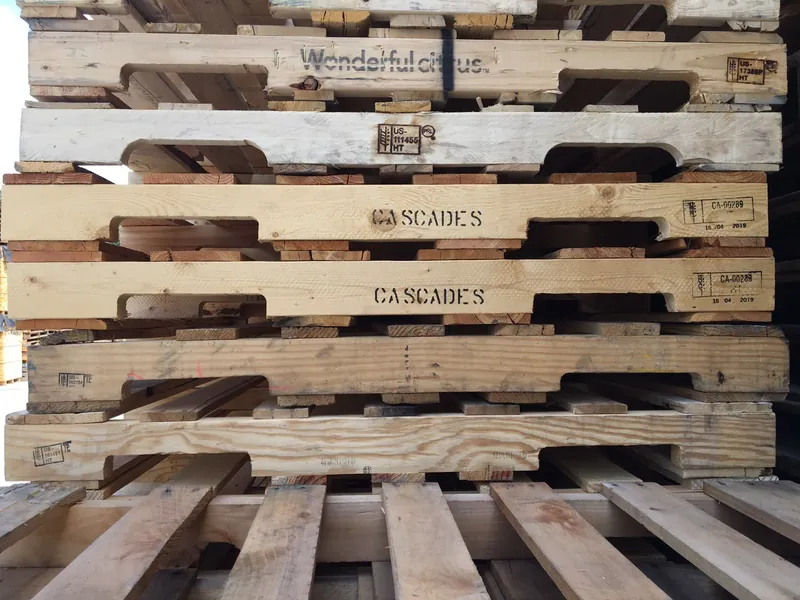
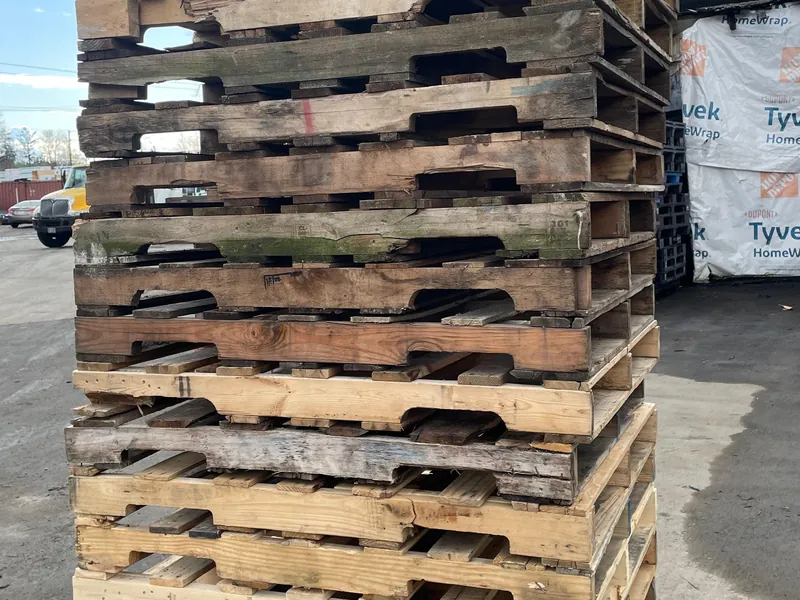
For context on volume: Express Pallet Collection can supply around 16,000 #1 pallets, 20,000 #2 pallets and 3,000 reconditioned block pallets a month, with no cap on new pallet production.
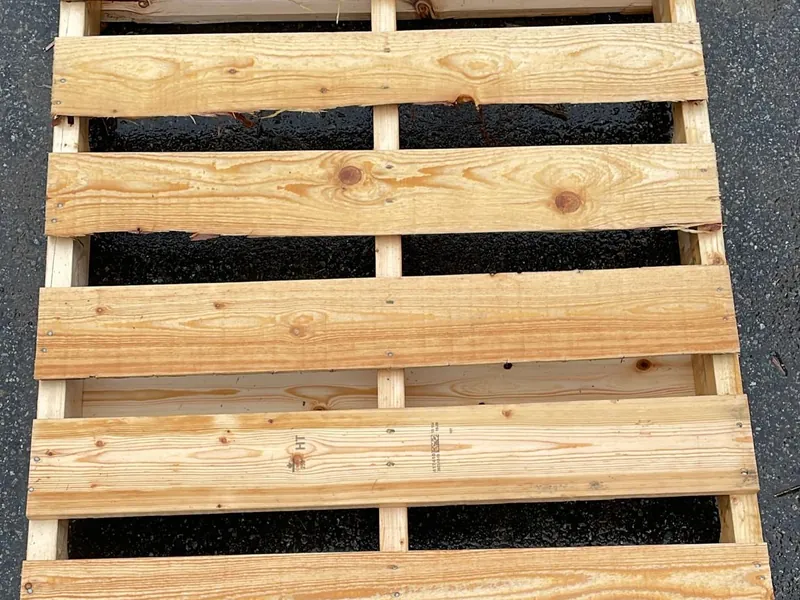
Heat-treated pallets and ISPM-15: when you need them
If you export, this is the section that matters most. ISPM-15 is the international standard for wood packaging. According to the Canadian Food Inspection Agency (CFIA), more than 80 countries require it. To comply, wood packaging must be:
- debarked,
- heat-treated to at least 56 °C for at least 30 continuous minutes throughout the wood, including its core, and
- stamped by a facility registered under the CFIA’s heat-treated wood products certification program.
The stamp includes the letters HT (heat-treated). The CFIA notes that exemptions may apply for shipments to the continental United States, but requirements can change and many customers ask for HT pallets anyway — confirm with your buyer or customs broker before you ship.
What affects the price of a pallet?
Pallet prices move with the lumber market, so most suppliers in BC quote rather than publish fixed prices. These are the factors that make the biggest difference:
- New vs recycled and grade — #2 recycled pallets cost the least; new pallets the most.
- Size and type — standard 48 x 40 pallets are the most economical; square, block and custom pallets cost more.
- Heat treatment — HT pallets cost more because of the treatment and certification.
- Quantity and frequency — larger and recurring orders get better pricing.
- Delivery distance — full loads close to the yard cost less to deliver.
- Custom specifications — heavier lumber, extra deck boards or unusual dimensions add cost.
Pallet pickup and selling your used pallets
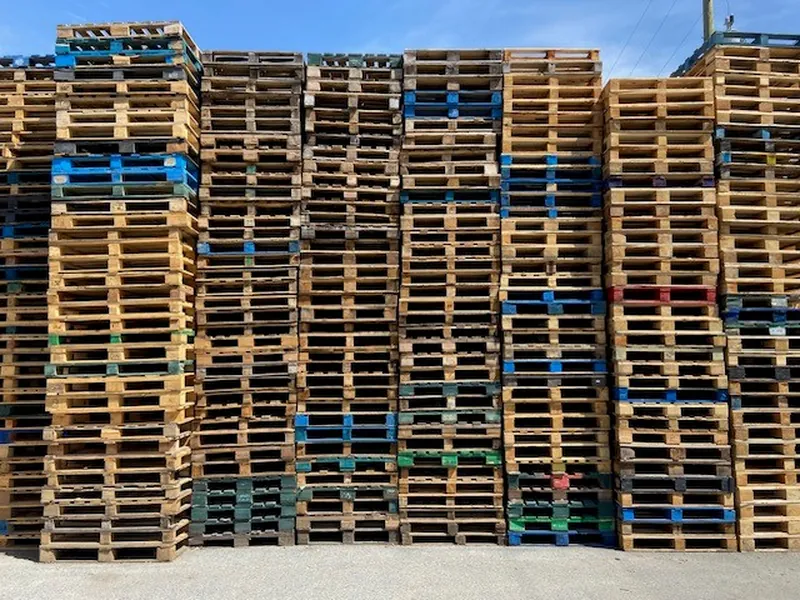
Pallets pile up fast. Many suppliers, including us, buy used pallets and pick them up. At Express Pallet Collection, pickup is free for loads of 200 or more standard-size 4-way pallets; smaller loads and mixed sizes have a pickup charge that we quote upfront.
How to order pallets: a quick checklist
- Pallet size (or your product and racking dimensions)
- Type: stringer or block, 2-way or 4-way
- Grade: new, #1, #2 or reconditioned
- Heat-treated or not (where are you shipping?)
- Quantity, and whether it is one-time or recurring
- Delivery address and the date you need them
- For custom pallets, crates or skids: a drawing or spec and load weight (crates and skids have a minimum order of 50)
With those details we can usually reply with pricing and availability within one business day, and deliver in-stock pallets the next business day across the Lower Mainland. Ready? request a quote or call +1 778-776-1957.
Frequently asked questions
Is a skid the same as a pallet?
In BC the words are often used interchangeably. Strictly speaking, a skid has only a top deck, while a pallet has top and bottom deck boards. We supply pallets and build custom skids (minimum order 50).
What is the standard pallet size in Canada?
48 x 40 inches (1219 x 1016 mm). It is the standard for grocery, retail and most distribution centres in North America.
What is the difference between a 2-way and a 4-way pallet?
A 2-way pallet can only be lifted from two opposite ends. A 4-way pallet can be lifted from all four sides, which makes loading and racking faster.
Are recycled pallets as strong as new ones?
A #1 (Grade A) recycled pallet performs like a new pallet for most jobs. #2 (Grade B) pallets are fully functional but show repairs or wear, so they suit one-way shipments and storage.
Do I need heat-treated pallets to ship to the USA?
The CFIA notes exemptions may apply for the continental USA, but check with your buyer or customs broker. Overseas shipments generally require ISPM-15 heat-treated pallets.
How many pallets fit on a 53-foot trailer?
About 26 standard 48 x 40 pallets fit on the floor when loaded straight, and up to 30 when turned.
Where can I buy pallets in the Lower Mainland?
Express Pallet Collection supplies new, recycled and heat-treated pallets from Surrey, with next-business-day delivery. See our pages for pallets in Surrey, Abbotsford and Vancouver & Burnaby.